The biggest misconception about curtailment: from damage control to value control
Curtailment is gaining ground as a tactical necessity in today's electricity markets. But most companies still think of it as a reactive measure.
.png)

The most common misconception about curtailment is that it’s only about damage control. In reality, when approached with the right tools and setup, curtailment becomes a core part of value control: an active, end-to-end strategy to maximize returns across multiple markets.
Let’s break down the difference.
Damage Control: Reacting to what’s already settled
In a damage control mindset, curtailment is used only when prices go negative and the financial pain becomes ubiquitous. This usually happens:
- Late in the process: once day-ahead prices are already settled
- Without coordination: supplier is not in the loop
- Without foresight: based on simple rules (e.g., if price < X, shut down)
- Without control over nominations, creating an upstream imbalance risk
It’s a reactive approach that attempts to limit losses. It often introduces operational risk, supplier frustration, or even new costs through imbalance charges.
In short, it’s just defensive.
Value Control: Managing the full chain proactively
Value control turns curtailment into a strategic lever.
Rather than reacting to prices, companies forecast, simulate and nominate assets with the goal of maximizing value before prices are locked in.
This means:
- Smart forecasting of price trends and flexibility needs across day-ahead, intraday, and imbalance markets
- Optimized nominations that reflect what’s economically and operationally optimal, not just what’s technically possible
- Real-time steering during delivery
- End-to-end coordination between energy contracts, software, and asset connectivity
The key difference is perspective: instead of zooming in on one painful moment, value control looks at the entire operational window from pre-nomination to post-delivery.
The cost of stopping at “Damage Control”
Many companies believe they’re already “managing curtailment” because they have some basic logic in place to shut off solar when day-ahead prices are lower than 0 €/MWh. But this is just scratching the surface.
Without:
- A supplier that allows flexible nominations
- A forecasting and optimization layer
- A connected local control system
…you’re left patching holes instead of capturing value.
Damage control may avoid worst-case losses, but value control generates upside. That’s a fundamentally different role for curtailment to play in your operations.
Observe the difference yourself, with Companion.energy's "BE Solar FlexScore"
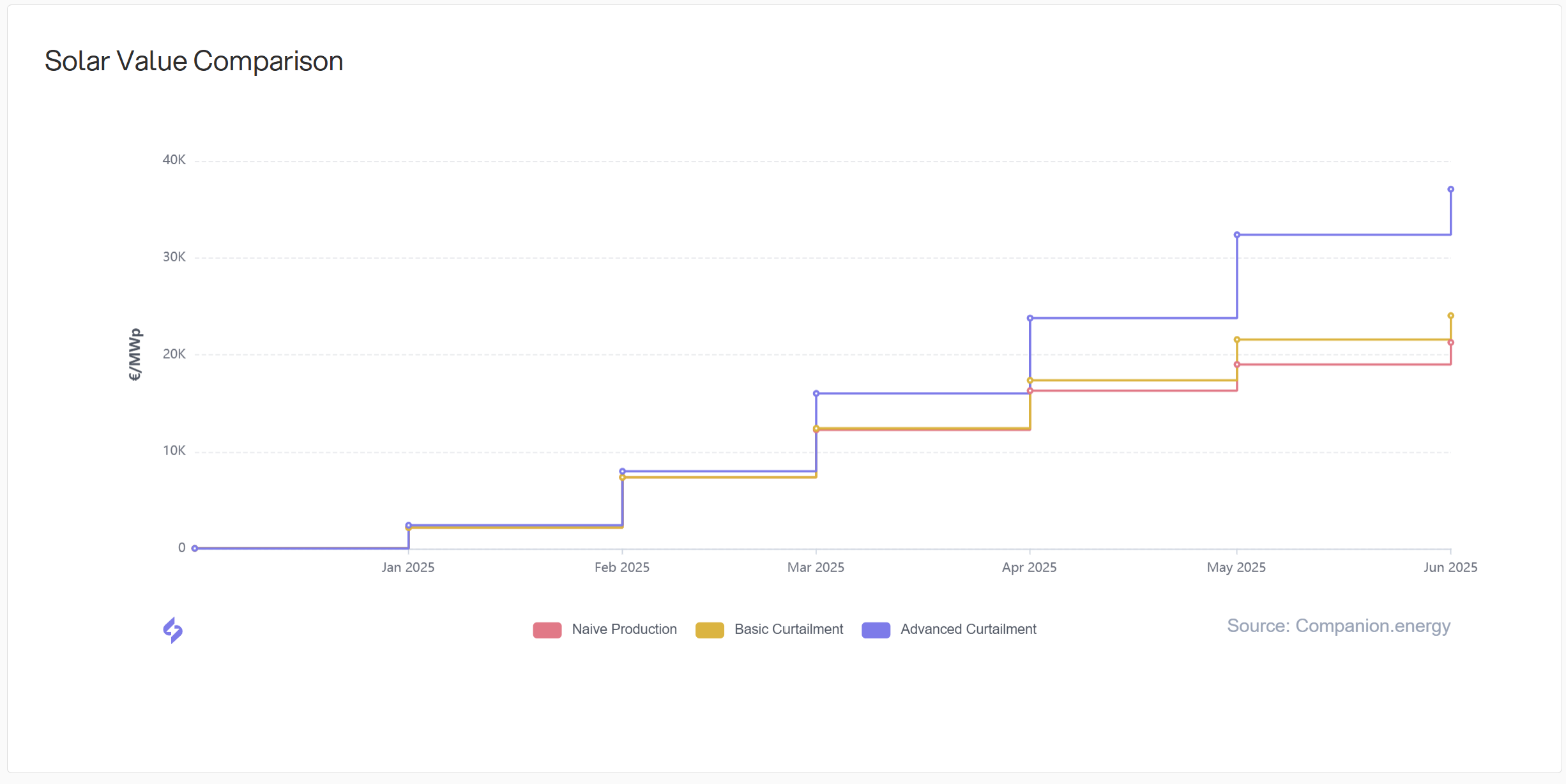
From pain avoidance to profit alignment
When curtailment is driven by value control:
- You prevent bad outcomes before they happen
- You coordinate across all relevant markets (not just day-ahead)
- You make curtailment decisions that benefit you, not just your supplier
- You ensure your incentives are aligned with those steering your asset
As Elias Vandeputte, Flexibility Manager at BEE said in our webinar:
“We don’t steer the supplier’s portfolio — we steer at EAN level for the customer. That’s the only way to align incentives and generate real value.”
This mindset shift is what separates reactive players from strategic ones.
Value-driven curtailment unlocking new revenue, +30€/MWh in April '25
When you take the value control approach, you don’t just react to market signals. You forecast them, nominate accordingly, and steer in real time to align with economic opportunities.
A clear example of this is the BEE Hive model, where Companion.energy acts as the forecaster and optimizer.
In April 2025, our forecasting and steering decisions enabled participating sites to earn more than €30/MWh in imbalance income, visible directly on their invoice. That’s not a hidden benefit; it's transparent, measurable financial impact.
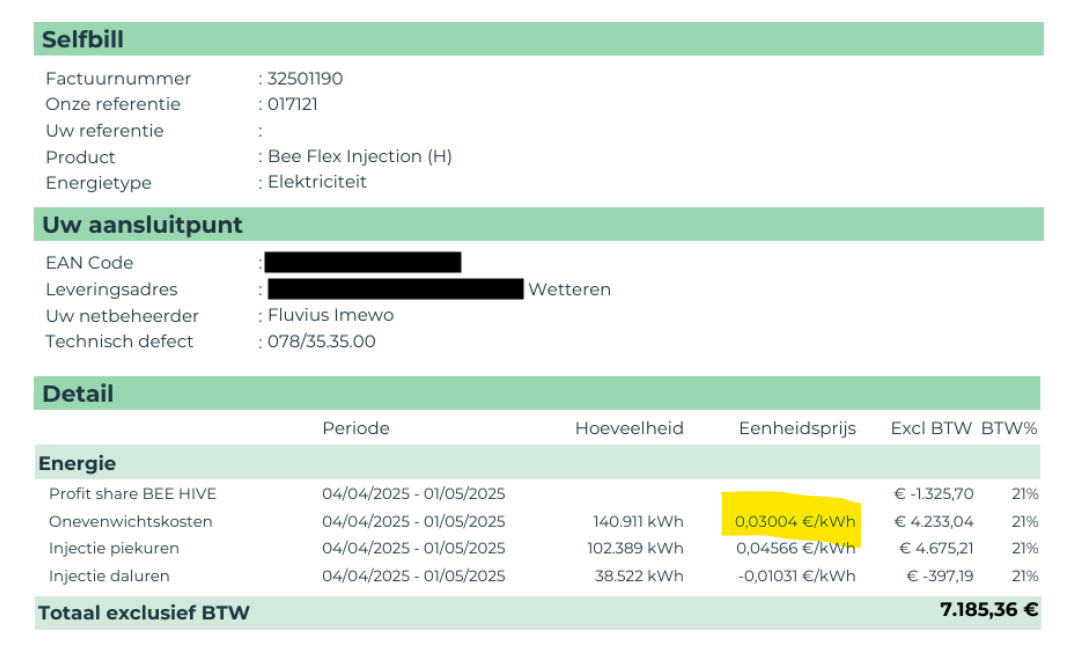
This is the power of value control: turning curtailment into a lever for profitability, not a footnote in crisis management.